Where we are
Our apartment is located on Pilotów Street, in a small, quiet and guarded condominium, in the business district of Kraków.
Just 4 km from the city center it can be easily reached by the public transport. Main Market Square 4 km, St. Mary’s Basilica 4 km, The Cloth Hall 4 km, Collegium Maius of the Jagiellonian University 4 km, Wawel Royal Castle 5k km, Kazimierz Jewish District 4,5 km, Wieliczka Salt Mine 16 km, Auschwitz Concentration Camp 60 km.
Nearest supermarket ( ALMA ) 300 m, Pharmacy 300 m, Petrol Station 150 m, 4 Pilotów Street, McDonald’s Restaurant 300 m, Bike rental 600 m, ATM 300m. Next to the building you will find a Public Transport Stop ( 50 m ), from where you can easily reach any place in Krakow ( bus numbers: 124, 125, 152, 182, 184, 192, 424, 482, 484, 601 ).
Near Pilotów Apartment
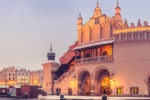
Main Market Square ~ 4km
See more
St. Mary's Basilica ~ 4km
See more
The Cloth Hall ~ 4km
See more
Collegium Maius of the Jagiellonian University ~ 4km
See more
Wawel Royal Castle ~ 5km
See more
Kazimierz Jewish District ~ 4,5km
See more
Wieliczka Salt Mine ~ 16km
See more
Auschwitz Concentration Camp ~ 60km
See more
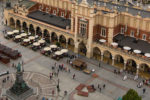
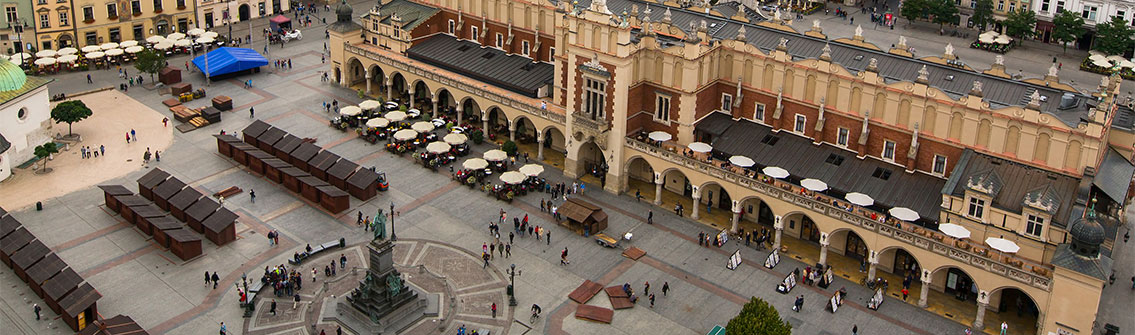
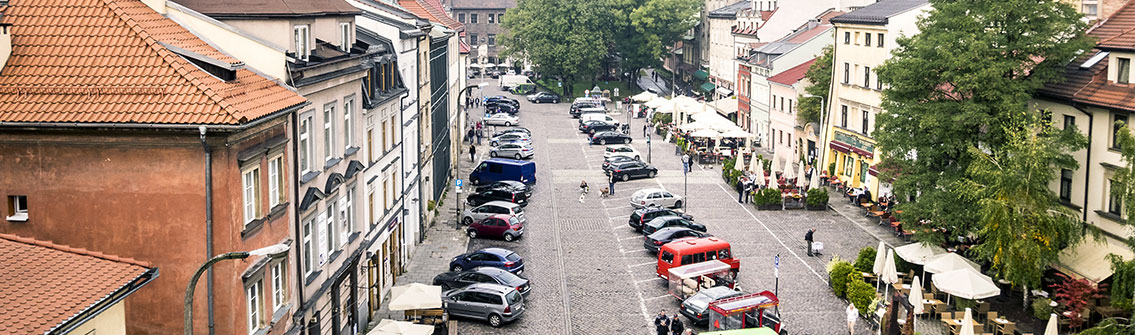
Main Market Square
The main square of the Old Town of Kraków, Lesser Poland, is the principal urban space located at the center of the city. The Project for Public Spaces (PPS) lists the square as the best public space in Europe due to its lively street life, and it was a major factor in the inclusion of Kraków as one of the top off-the-beaten-path destinations in the world in 2016.
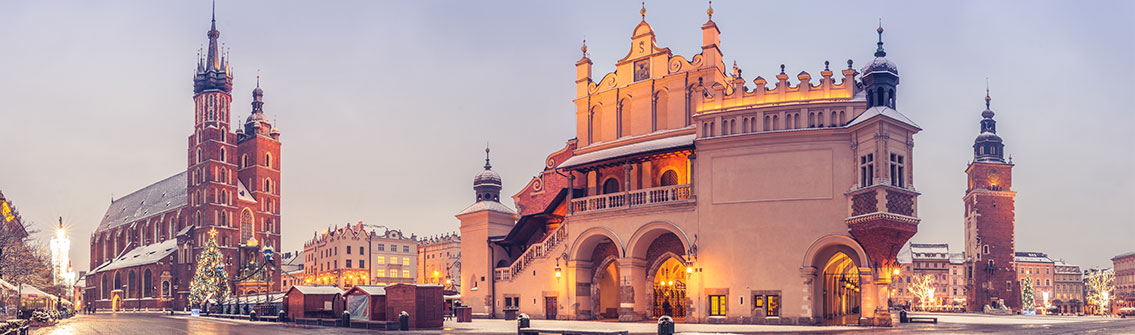
The main square is a square space surrounded by historic townhouses and churches. The center of the square is dominated by the Cloth Hall, rebuilt in 1555 in the Renaissance style, topped by a beautiful attic or Polish parapet decorated with carved masks. On one side of the cloth hall is the Town Hall Tower, on the other the 10th century Church of St. Adalbert and 1898 Adam Mickiewicz Monument. Rising above the square are the Gothic towers of St. Mary’s Basilica. Kraków Main Square does not have a town hall, because it has not survived to the present day.
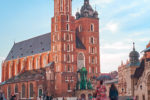
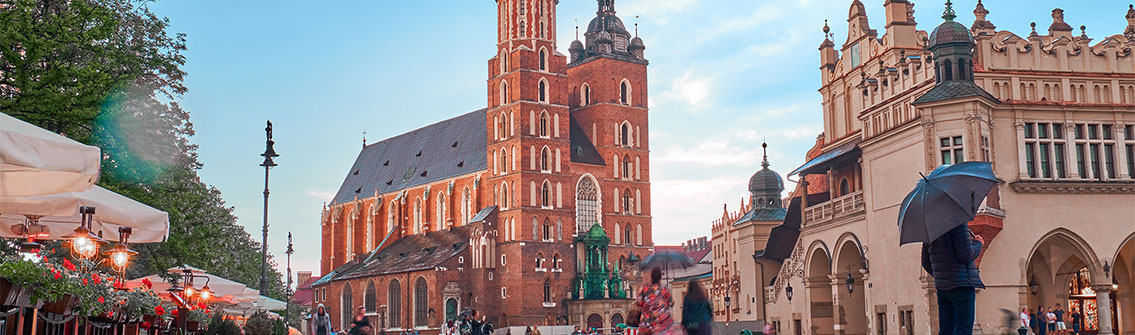
St. Mary's Basilica
Church of Our Lady Assumed into Heaven is a Brick Gothic church adjacent to the Main Market Square in Kraków, Poland. Built in the 14th century, its foundations date back to the early 13th century and serve as one of the best examples of Polish Gothic architecture. Standing 80 m (262 ft) tall, it is particularly famous for its wooden altarpiece carved by Veit Stoss.
On every hour, a trumpet signal—called the Hejnał mariacki—is played from the top of the taller of Saint Mary’s two towers. The plaintive tune breaks off in mid-stream, to commemorate a famous 13th century trumpeter who was shot in the throat while sounding the alarm before a Mongol attack on the city. The noon-time hejnał is heard across Poland and abroad broadcast live by the Polish national Radio 1 Station.
Saint Mary’s Basilica also served as an architectural model for many of the churches that were built by the Polish diaspora abroad, particularly those like Saint Michael’s and Saint John Cantius in Chicago, designed in the Polish Cathedral style.
The Cloth Hall
The Kraków Cloth Hall in Lesser Poland, dates to the Renaissance and is one of the city’s most recognizable icons. It is the central feature of the main market square in the Kraków Old Town (listed as a UNESCO World Heritage Site since 1978).
It was once a major centre of international trade. Traveling merchants met there to discuss business and to barter. During its golden age in the 15th century, the hall was the source of a variety of exotic imports from the east – spices, silk, leather and wax – while Kraków itself exported textiles, lead, and salt from the Wieliczka Salt Mine.
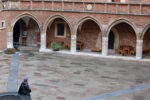
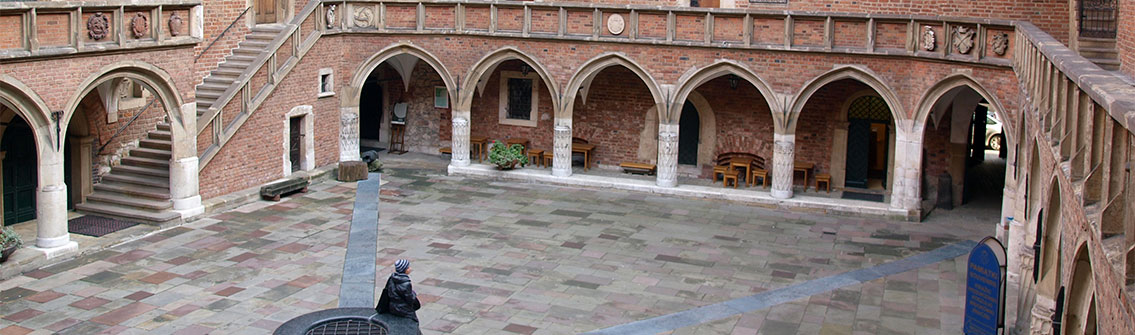
Collegium Maius of the Jagiellonian University
The Collegium Maius located in Kraków Old Town, Poland, is the Jagiellonian University’s oldest building, dating back to the 14th century. It stands at the corner of ulica Jagiellońska (Jagiellon Street) and ulica Świętej Anny (St. Anne Street) near the Main Square of the historic city centre. Collegium Maius is the location of the Jagiellonian University Museum (Polish: Muzeum Uniwersytetu Jagiellońskiego), a registered museum established on the initiative of Prof. Karol Estreicher after meticulous restorations which lasted from 1949 until 1964 bringing the edifice back to its original look from before 1840.
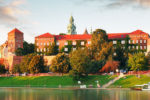
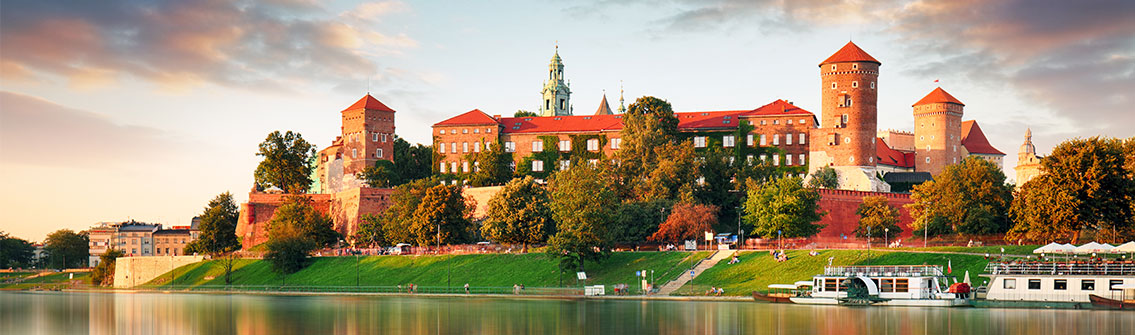
Wawel Royal Castle
The Wawel Castle is a castle residency located in central Kraków, Poland. Built at the behest of King Casimir III the Great, it consists of a number of structures situated around the Italian-styled main courtyard. The castle, being one of the largest in Poland, represents nearly all European architectural styles of medieval, renaissance and baroque periods. The Wawel Royal Castle and the Wawel Hill constitute the most historically and culturally significant site in the country. In 1978 it was declared a UNESCO World Heritage Site as part of the Historic Centre of Kraków.
For centuries the residence of the kings of Poland and the symbol of Polish statehood, the Castle is now one of the country’s premier art museums. Established in 1930, the museum encompasses ten curatorial departments responsible for collections of paintings, including an important collection of Italian Renaissance paintings, prints, sculpture, textiles, among them the Sigismund II Augustus tapestry collection, goldsmith’s work, arms and armor, ceramics, Meissen porcelain, and period furniture. The museum’s holdings in oriental art include the largest collection of Ottoman tents in Europe. With seven specialized conservation studios, the museum is also an important center for the conservation of works of art.
Kazimierz Jewish District
Jews had played an important role in the Kraków regional economy since the end of the 13th century, granted the freedom of worship, trade and travel by Bolesław the Pious in his General Charter of Jewish Liberties issued already in 1264. The Jewish community in Kraków had lived undisturbed alongside their ethnic Polish neighbours under the protective King Casimir III the Great, the last king of the Piast dynasty. Nevertheless, in early 15th century pressured by the Synod of Constance some dogmatic clergy began to push for less official tolerance. Accusations of blood libel by a fanatic priest in Kraków led to riots against the Jews in 1407 even though the royal guard hastened to the rescue.
As part of the re-founding of the Kraków university, starting in 1400, the Academy began to buy out buildings in the Old Town. Some Jews moved to the area around modern Plac Szczepański. The oldest synagogue building standing in Poland was built in Kazimierz at around that time, either in 1407 or 1492 (the date varies with several sources).
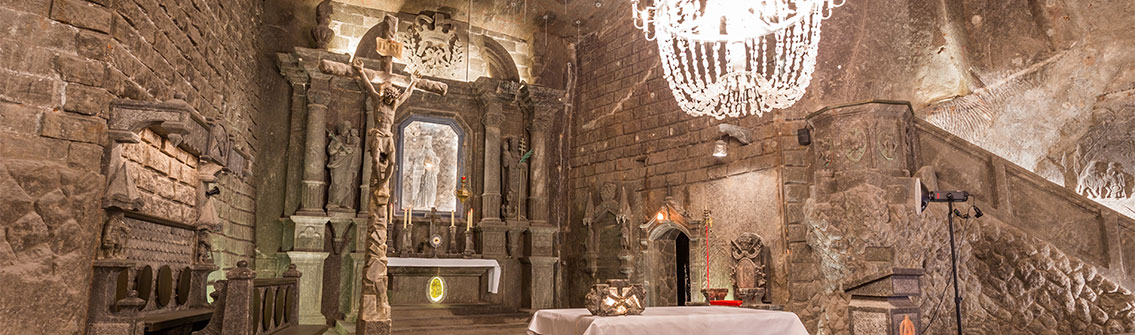
Wieliczka Salt Mine
The Wieliczka Salt Mine, in the town of Wieliczka, southern Poland, lies within the Kraków metropolitan area. Sodium chloride was formerly produced there from the upwelling brine – and had been since Neolithic times. The Wieliczka salt mine, excavated from the 13th century, produced table salt continuously until 2007, as one of the world’s oldest operating salt mines. Throughout its history, the royal salt mine was operated by the Żupy Krakowskie (Kraków Salt Mines) company.
Commercial salt mining was discontinued in 1996 owing to falling salt prices and mine flooding. The Wieliczka Salt Mine is now an official Polish Historic Monument (Pomnik Historii). Its attractions include the shafts and labyrinthine passageways, displays of historic salt-mining technology, an underground lake, four chapels and numerous statues carved by miners out of the rock salt, and more recent sculptures by contemporary artists.
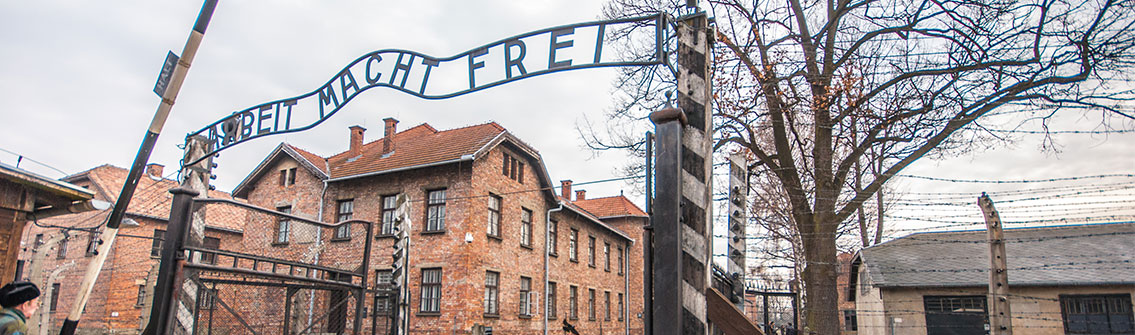
Auschwitz Concentration Camp
The Auschwitz concentration camp (Konzentrationslager Auschwitz) was a complex of over 40 concentration and extermination camps built and operated by Nazi Germany in occupied Poland during World War II and the Holocaust. It consisted of Auschwitz I, the main camp (Stammlager) and administrative headquarters in Oświęcim; Auschwitz II–Birkenau, a combined concentration and extermination camp three kilometers away in Brzezinka; Auschwitz III–Monowitz, a labor camp created to staff an IG Farben synthetic-rubber factory; and dozens of other subcamps.
After Germany invaded Poland in September 1939, sparking World War II, the Germans converted Auschwitz I, a former army barracks, to hold Polish political prisoners. The first prisoners, German criminals brought to the camp as functionaries, arrived in May 1940, and the first gassing of prisoners took place in block 11 of Auschwitz I in September 1941. Auschwitz II–Birkenau went on to become a major site of the Nazis’ Final Solution to the Jewish Question. From early 1942 until late 1944, transport trains delivered Jews from all over German-occupied Europe to the camp’s gas chambers. Of the estimated 1.3 million people sent to Auschwitz, at least 1.1 million died, around 90 percent of them Jews. Approximately one in six Jews killed in the Holocaust died at the camp.
In 1947 Poland founded the Auschwitz-Birkenau Memorial and Museum on the site of Auschwitz I and II, and in 1979 it was named a World Heritage Site by UNESCO.